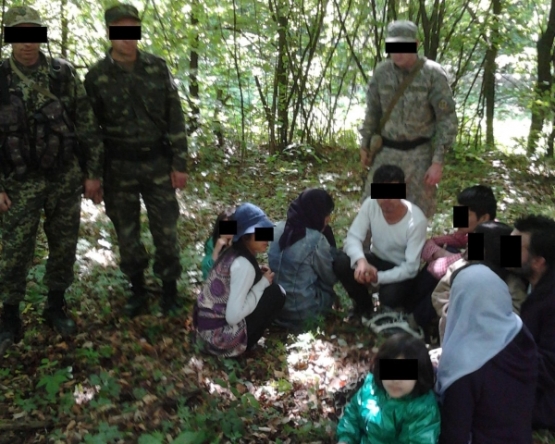
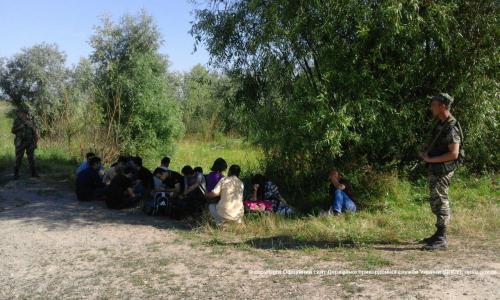
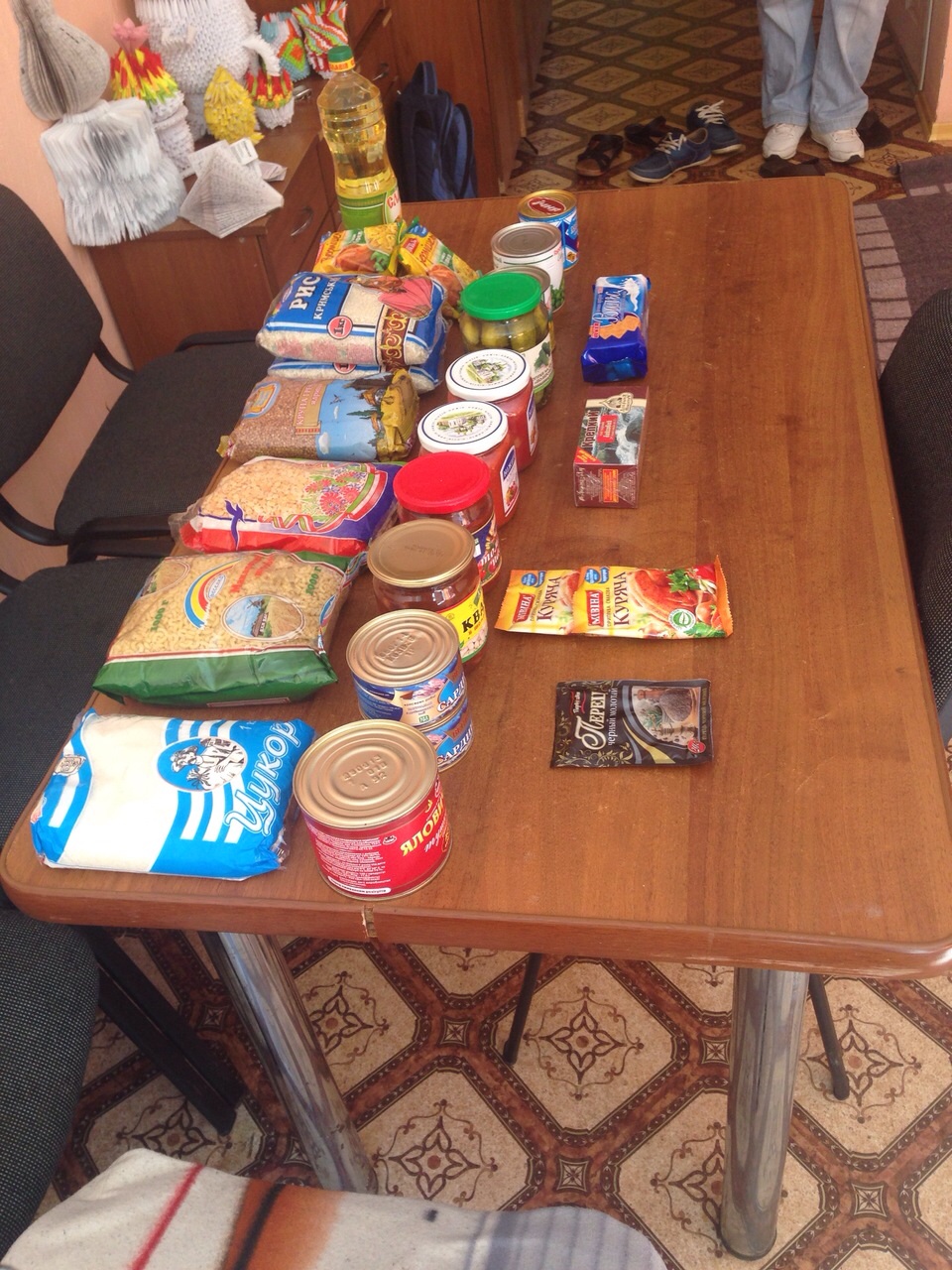
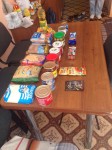
 Recently, 70 or so refugees in Latoritsa refugee camp in Mukachevo (Western Ukraine) went on hunger strike, they protested against the conditions under which they are held and most notably against their malnutrition. The inhabitants of the camp entirely depend on the support they receive from the camp administration: a food package in the value of UAH 210 (about Euro 13) for two weeks.
According to Ukrainian law, recognized refugees get a one-time support of UAH 17 (approximately Euro 1) as starting grant. The alternative would be employment but because no Ukrainian language classes are provided it is not surprising that they cannot find work. Most of the 70 residents in the camp (about 20 single men, the others members of families) have a so-called “dovidka”, a residence permit for people during an on-going asylum procedure, which has to be prolonged every 30 days. However, it was reported to BMPU that sometimes the prolongation of the “dovidka” is delayed for longer periods of time due to ineffective bureaucracy. This has various serious effects. First, people fear controls and arrests by the local police and therefore hardly ever leave the camp. Second, without a valid ”dovidka” they are not handed out the food parcels. And third, a “dovidka” is the precondition for accessing to the official labor market but in reality no one has a job anyway, including the ones who have already received a status.
Apart from these meager food packages asylum seekers receive no other benefits. In case they require any other items, like tooth brush or a bus ticket to even attend their court hearing they are compelled to sell goods from their packages. Also the medical support has been criticized as woefully inadequate. As was reported to BMPU, a nurse who visits the camp twice per week hands out nearly always the same tablets. But if the residents of the camp should go to the local hospital because of more serious health problems not only are there communication problems (the doctors do not speak English) but also are sometimes confronted with racist prejudices and attitudes. Even cases of racially motivated violence have been reported to the BMPU: As was reported to BMPU, two dark-skinned refugees were recently attacked at the local market and received seriously injuries. The “solution” proposed by the camp administration: ”Do not leave the camp”. Another serious problem is, that in Ukraine asylum-seekers and refugees do not have a right to accommodation which means that the residents of the camp are afraid of being kicked out, if they complain “too loud”. Furthermore, there is the structural problem that the camp administration is working for the same state body (State Migration Service) like the persons who are actually deciding on the asylum applications. Therefore the camp residents fear that complaints can have negative effects on their asylum cases.
Finally, as result of the recent protests the residents of the camp were visited by a representative of UNHCR Ukraine – this raised high hopes amongst the refugees. But the results of the meeting we discouraging. BMPU was told that neither UNHCR nor their local partner organization NEEKA can or want to change the situation. The “solution” for the language problem was to go to the market and study the language autodidactically. A participant of the meeting summarized it as follows: „I am only part of a business plan. Now we gave up all our hope. What is our future [in Ukraine]? You can only survive here, nothing else.”
The BMPU is aware of the highly problematic financial situation Ukraine is currently facing, of the hundreds of thousands of Ukrainian IDPs the Ukrainian state must care for and the important contribution the UNHCR makes to this. However, neither should go on the expenses of the small number of international refugees for which Ukraine remains responsible under international law and which fall under the mandate of the UNHCR.
Background
It is not that there is no money for catering for international refugees. In recent years, the EU has spent millions of Euro (see the list below), though has mainly been spend on the expansion of the detention capacity and on enhancing border security. From the beginning of the 1990s, the EU has been facilitating the implementation of a comprehensive migration regime in Ukraine, not only by transferring knowledge on so-called “migration management” but also by direct financial support. For instance, in the context of the adoption of the readmission agreement between Ukraine and the EU in 2008, the EU allocated Euro 30 million for establishing new detention centres (there undocumented migrants can be detained for up to 12 months) and new so-called “Temporary Holding Facilities” (THFs) run by the State Border Guard Service of Ukraine where irregular migrants can be detained for up to 10 days. For the preparation of this immense expansion of detention capacity for irregular (transit) migrants in Ukraine, a British consulting company, ARUP, received Euro 4 million. All of this money was provided in spite of the fact that not even half of the already existing detention capacity is actually used. This capacity was also built up and operated with the financial support of the EU and in course of various IOM projects: CBMM Phase 1 and 2 – total budget Euro 7.2 million, GUMIRA – total budget Euro 2.5 million, and SIREADA – total budget Euro 2.3 million. These figures clearly demonstrate where the actual priority of Europe’s migration policy in Ukraine lies: deterrence and detention. This must be understood as a clear warning to international migrants and refugees already in Ukraine not to try to irregularly cross the borders into the neighboring EU-countries or if they fail they will be punished by being detained for 12 months in EU supported and financed detention centres.
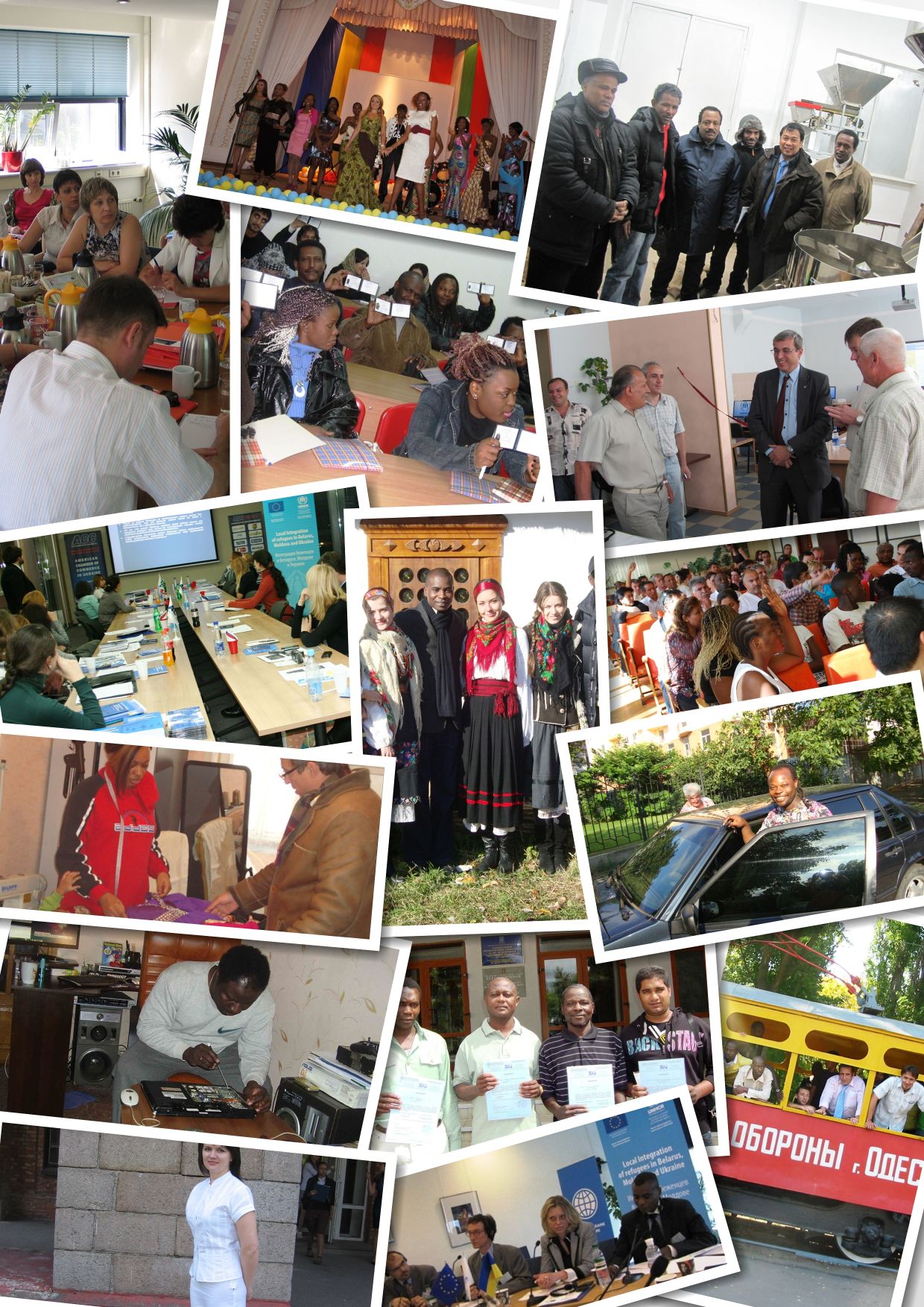
In addition, some projects were also aiming at improving the national asylum-system and refugees integration. For example, UNHCR states on its website, garnished with pictures of “happy” and “well integrated” refugees:
 As of 1 January 2012 the Project Local Integration of Refugees in Belarus, Moldova and Ukraine has entered its Phase II. It serves as a logical continuation of the efforts commenced by governments, NGOs, refugees themselves and the UNHCR in the Phase I of the Local Integration Project. The overall budget of the Phase II of the Local Integration Project comprises of about 1,4 mln Euro. The project is co-funded by European Union and UNHCR. General outputs of the Phase II of the Local Integration Project are:
- Enhanced institutional, administrative and professional capacities of government authorities to administrate socio-economic issues related to refugees and asylum seekers in each country.
- Refugees are assisted to integrate in the chosen country and to become self-reliant; decreased dependence on outside assistance; enhanced capacity of refugees to support their communities.
- Improved capacity of local NGOs in Belarus, Moldova and Ukraine to implement current and future refugee related actions.
- Increased tolerance towards refugees and asylum seekers; raised awareness on integration needs of refugees in Belarus, Moldova and Ukraine.
On the occasion of the recent protests by the residents of the open refugee camp in Mukachevo, BMPU talked to some of the protesters. These drew a completely different picture of the actual integration perspectives. The BMPU’s visit in Mukachevo illustrated that these efforts do not show much practical results on the ground. We call on the Ukrainian authorities and on UNHCR Ukraine to do more than preparing good looking but deceptive websites, to not forget the international refugees in the more remote regions of the country, to live up to their international obligations and mandates and provide benefits and services to refugees that enable them a humane existence.
Appendix
Additional detention capacity:
- 2008 – 2016: Project title: READMIT (building up/refurbishment of detention centres/THFs). Implementing partner: Ukrainian state. EU contribution: Euro 30.000.000.
IOM:
- 2005 – 2008: Project title: CBMM Capacity Building of Migration Management – Ukraine (Phase 1 and Phase 2). Implementing partner: IOM. EU contribution: Euro 6.500.000.
- 2006 – 2008: Combating Trafficking in Human Beings in Ukraine and Moldova. Implementing partner: IOM. EU contribution: Euro 1.700.000.
- 2006 – 2013: HUREMAS – Reinforcing the SBGSU human resources management Joint EU-US project (Phase 1 and 2). Implementing partner: IOM. EU contribution: Euro 1.000.000.
- 2009 – 2010: Project title: GUMIRA – Technical Cooperation and Capacity Building for the Governments of Ukraine and Moldova for the Implementation of the Readmission agreements with the EU. Implementing partner: IOM. EU contribution: Euro 2.000.000 .
- 2011 – 2013: Project title: SERIADA (GUMIRA follow-up). Implementing partner: IOM. EU contribution: Euro 2.400.000.
- 2012 – 2014: Project title: SURCAP – Strengthening surveillance capacity on the ‘green’ and ‘blue’ border between Belarus and Ukraine (Phase I). Implementing partner: IOM. EU contribution: Euro 2.600.000.
- 2013 – 2015: MIGRECO – Strengthening migration management and cooperation on readmission in Eastern Europe. Implementing partner: IOM. EU contribution: Euro: 1.920.000.
- 2014 – 2016: Project title: SURCAP – Strengthening surveillance capacity on the ‘green’ and ‘blue’ border between Belarus and Ukraine (Phase II). Implementing partner: IOM and ICMPD. EU contribution: Euro 5.350.000.
UNHCR:
- 2006 – 2009: Söderköping Process/The Cross-Border Cooperation. Implementing partner: UNHCR. EU contribution: Euro 2.200.000.
- 2009 – 2011: Project title: Local Integration of Refugees in Belarus, Moldova and Ukraine (Phase 1). Implementing partner: UNHCR. EU contribution: Euro 2.000.000.
- 2011 – 2013: Project title: Local Integration of Refugees in Belarus, Moldova and Ukraine (Phase 2). Implementing partner: UNHCR. EU contribution: Euro 1.100.000.
- 2009 – 2013: Project title: Regional Protection Support Project in Belarus, Moldova and Ukraine. Implementing partner: UNHCR. EU contribution: Euro 4.500.000.
ARUP:
- 2009 – 2014: Consultancy to set up Custody Centres and Temporary Holding Facilities for Irregular Migrants in Ukraine. Implementing partner: ARUP. EU Contribution: Euro 4.000.000.
ICMPD:
- 2006 – 2008: Project title: Strengthening capacities and cooperation in the identification of forged and falsified documents in Ukraine. Implementing partner: ICMPD. EU contribution: Euro 630.000.
- 2008 – 2010: ERIT – Capacity Building and Technical Support to Ukrainian Authorities to Effectively Respond to Irregular Transit Migration. Implementing partner: ICMPD. EU contribution: Euro 1.700.000.
Danish Refugee Council:
- 2007 – 2009: Project title: Strengthening Asylum and Protection Capacity in Ukraine by Enhancing the Capacity of Governmental and Civil Society Stakeholders in a Participatory Approach and Crosssector Cooperation. Implementing partner: Danish Refugee Council. EU contribution: Euro 430.000.
- 2009 – 2011: Legal and Social Protection of Asylum Seeking and Refugee Children in Ukraine. Implementing partner: Danish Refugee Council. EU contribution: Euro 960.000.
ECRE:
- 2005 – 2008: Project title: The protection of refugees, asylum seekers and forced migrants. Implementing partner: ECRE. EU contribution: Euro 530.000.
- 2009 – 2011: Project title: Monitoring safe and dignified return and conditions of detention. Protecting the Rights of Asylum Seekers, Refugees and IDPs in Belarus, Moldova, the Russian Federation and Ukraine. Implementing partner: ECRE. EU contribution: Euro 650.000.
Caritas Austria:
- 2006 – 2008: Project title: Enhancing Capacities in the Area of Protection and Treatment of Refugees and Asylum Seekers in Zakarpattya / Western Ukraine. Implementing partner: Caritas Austria. EU contribution: Euro 700.000.